


OPERA IN CONCORSO Sezione Scultura/Installazione
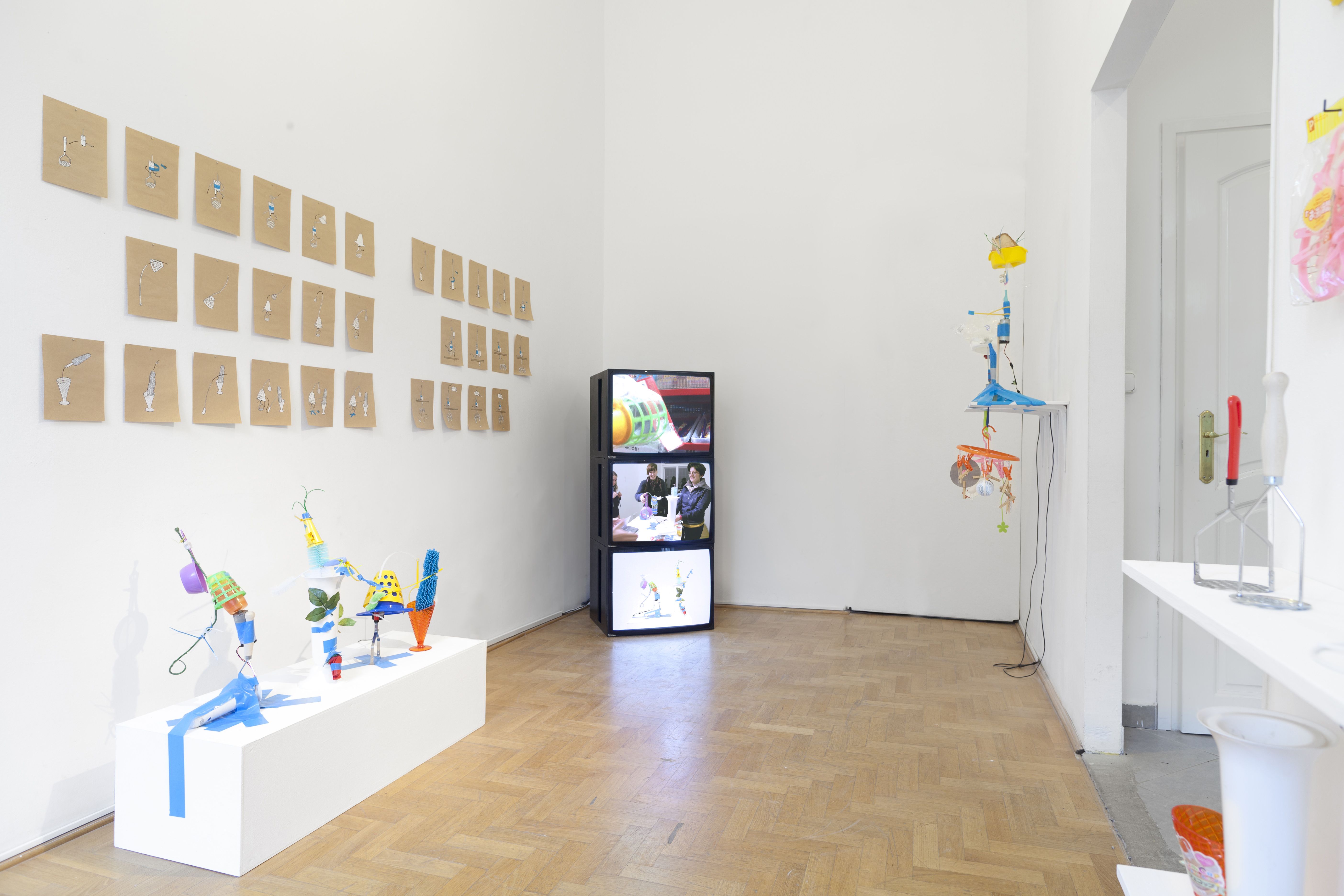
Encounter with Doppelgänger
kinetic, daily necessities, motors, tapes, instruction, video, etc.
dimensions variable
Tsuyoshi Anzai
nato/a a Tokyo, Japan
residenza di lavoro/studio: Saitama (JAPAN)
iscritto/a dal 14 apr 2015
Under 35
Altre opere
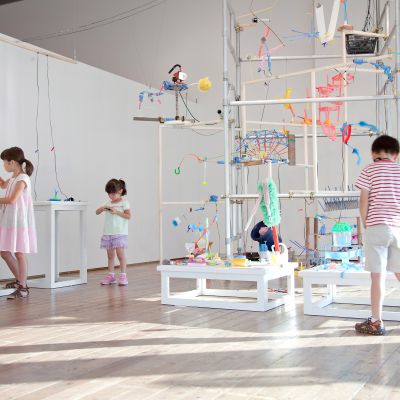
platonic machines
kinetic, daily necessities, motors, instruction, aluminum pipe, etc.
10m x 10m
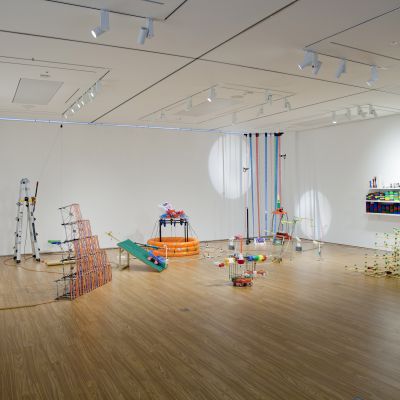
Leaving my machines with machine-sitters
kinetic, skype, daily necessities, motors, tapes, pc, drawing, etc
7m x 5m
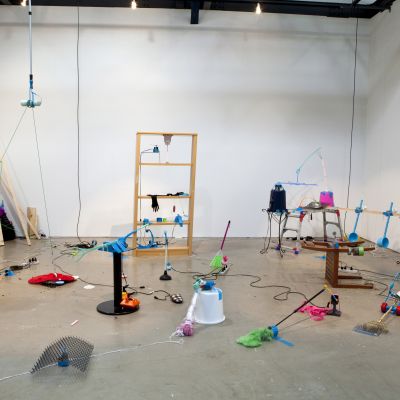
Stop MAKE-ing Machine
kinetic, web archive, daily necessities, motors, tapes, website, etc.
dimensions variable
Descrizione Opera / Biografia
[ A description from the catalogue of “Being-in-the-Wired-World“, Kawasaki City Museum by Masafumi Fukagawa, chief curator at Kawasaki City Museum]
Anzai Tsuyoshi creates strange machines by composing common plastic articles and chairs. After being connected to a motor, they begin to move in amazing ways. Anzai’s installations are made up of combinations of these machines and video works that use machines as a motif.
The word ”machine,” which is key to Anzai’s work, was an important theme in 20th century art history. The Italian Futurists lauded the sense of speed inherent in the machines as the century’s new aesthetic. But this view of machines differed somewhat from other artists of the era. Dadaist like Marcel Duchamp and Francis Picabia, for example, distanced themselves from mechanical civilization and treated machines in a cynical manner, adopting meaningless devices without any practical function as a motif. To Anzai, these principles are a legacy of the past, and have no part in his lineage. His machines are nothing like the racing cars that were exalted by the Futurists for their performance. Though they lack a practical use, Anzai’s devices are not simply meaningless images-they are real machines that actually move. When he flips the switch, they perform an awkward kind of action. This moving entity seems to contain a will of its own. And as a result, it seems far from a cold machine, and instead assumes an amusing and wondrous quality. A reversal occurs. What do these things mean to us? Beyond their superficial agility, Anzai’s machines present profound questions regarding the relationship (or ”communication”) between things in the world and people.
[ About the artwork in contest ]
“Encounter with Doppelgänger” is a participatory kinetic installation guided by the instructions of Tsuyoshi Anzai.
Anzai asked people in Budapest to make copies of his machine works by following his instructions.The participants interpreted the instructions on how to build the machines and reconstructed them using materials that they found in everyday life in Budapest.
Firstly, he built machines in Japan using everyday items and motors, and created the instructions on how to build them with drawings alone. Then, at the workshop in Budapest, the participants interpreted the instructions, went to buy everyday items for the components of the machines, and built the machines according to their own interpretations.”This process enabled us to learn the participants’ subjective view and cultural background by looking at “the way they interpret the instructions”.
The instructions do not always clearly indicate which item it refers to. Also, in some countries, people may find some of the items unfamiliar. Despite some obstacles, they were able to figure out solutions on their own and finally completed the machines. In this way, the machines were reproduced through the process that was beyond the artist’s control. Are the duplicated machines merely copies of the originals? Anzai interprets the relationship between the duplicates and the originals as two originals being derived from the same origin.
The title makes an analogy between “Doppelgänger” and the unique relationship of the two machines produced in two different countries.