Descrizione Opera / Biografia
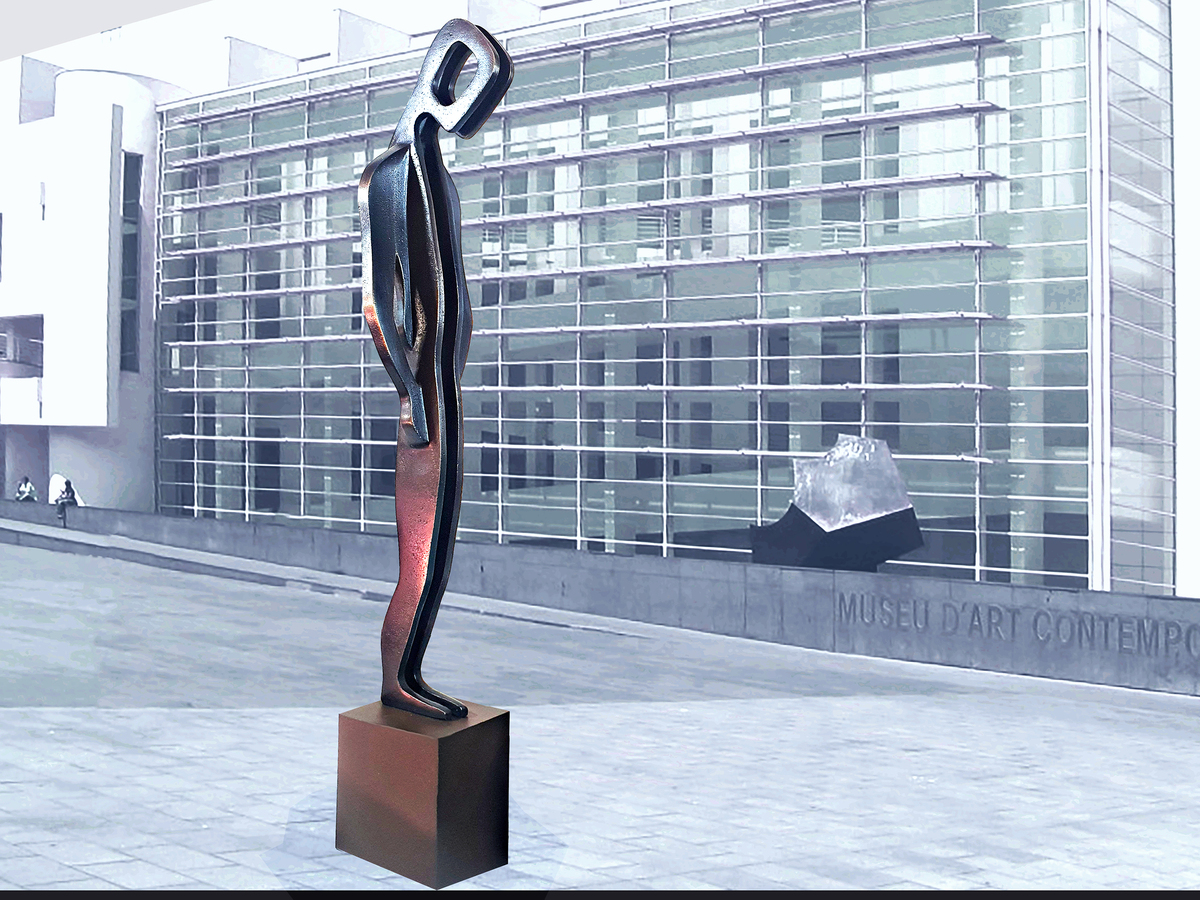
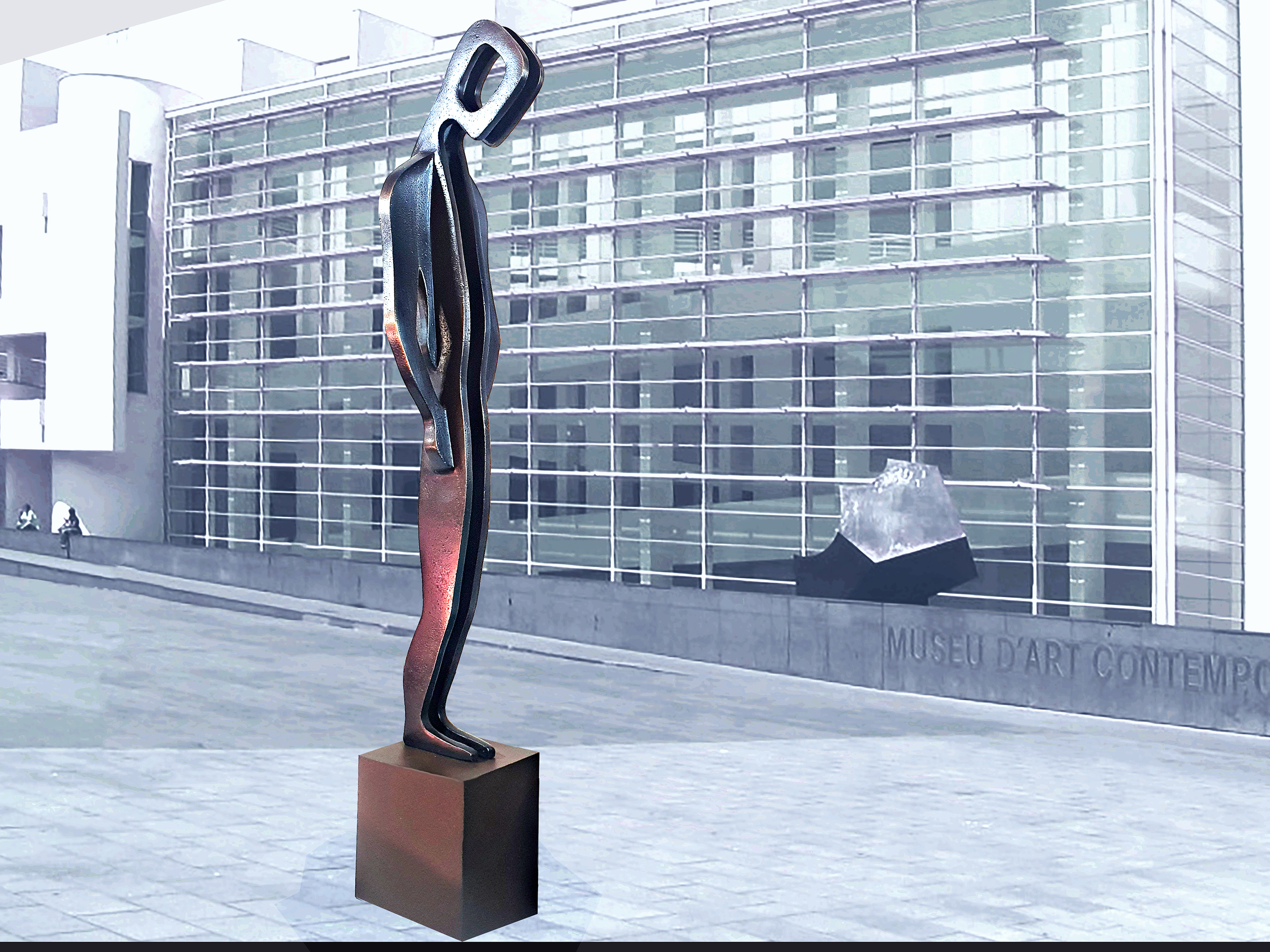
From the series ”Human Figure Studies” from 2016. Mock-ups made with recycled cadboard, to study human movement, expression, and emotions using mainly standing figures, each looking for a different feeling that could be shared by the viewer. They were made in a medium size (aprox 1 meter high), always thinking that they were made to be manufactured in a big size (2 meters tall or more). These sand-cast pieces are just to test the material and probably the finish of the series for when they will be developed for the Urban Sculpture Project, to which the work is committed, and the compromise of trying to bring culture to every corner as a way to equalize inequality.
Born in Santiago, Chile, he spent his childhood working with copper in his family’s arts and crafts business, which introduced him to the world of sculpting, which he changed after five years of academic studies in architecture. He moved to Barcelona in 1976 after completing this period. He started working as a designer to make a living. And what should have been a brief stint turned into 30 years of work, first as an industrial designer and then as a graphic designer and image consultant for various companies. He also continued with housing renovations for several years and was in charge of developing and managing a website for tourist apartments.
In 2014, he looked back on his arts and crafts work and his fledgling sculpture work and realized it was time to bridge the gap. The studies in drawing, metal engraving, and architecture, as well as experience as an industrial and graphic designer, allow him to begin this new life as a self-taught apprentice working in sculpture using cardboard and recycled cardboard, very inexpensive materials that allowed him to work intensively on prototypes, as the goal has always been large-scale exterior sculptures.
After nine years of working on several different collections, all related to the human figure, in many ways related to his personal life and also to what has happened and is happening in the world, the constant injustice of the powerful against the weak, and the lack of possibilities for these last ones to have a decent education,
And this reality has given meaning to his work. The phrase ”One sculpture in the street, one step in culture” defines the future of his work and his aim outside the circle of galleries and fairs by using his work as a cultural tool.
The architect understands that the sculpture has to have a social value because it is in the urban framework and does not make sense as a decorative object left on a shelf.
The urban sculptor and architect have never felt the need to call themselves artists, since the word does not really define the work done. They are creative workers who keep doing what they do to seek excellence in their work. Every day is work, there is no magic in between; there is no muse that comes to illuminate, it is just work and more work where one thing leads to another.
To start this adventure years ago, the material used was recycled cardboard as the base of the work, since it was the cheapest material to find. The work was always considered a prototype. And it was understood that for these projects to come true, sponsors are required to reach the point where the work becomes real, part of people’s lives in streets and squares, public spaces where they can interact with passers-by and integrate into the lives of the people in the neighborhoods.
The human figure, how it is expressed, its movements, and how it relates to the environment are the leitmotiv with which one works, as are the confrontations between it and the environment that end in violence, repression, and cruelty by power against people, which repeat themselves cyclically throughout history.
The theme of the work carried out varies constantly between the values of decomposition, movement, and solitude, since it is a way of constantly forcing the imagination, with the need to have several projects lined up, waiting to be developed, so that when one is finished, another comes without interruption; or even develop several different projects at the same time to keep your mind constantly working. Where there is passion, there must be work and more work.
Within all these variables, the human figure continues to be the central axis of the work. The constant that connects everything is the human being and his ability or inability to relate to others. It is woven in different states of abstraction and with different ways of relating to others, with loneliness being a constant that ends up ordering the entire work.
Work after the pandemic opens as a reaction to COVID, new personal ideas, and a different vision of work, adding values of movement and exercise to fight against the stagnation of the pandemic. Dancing and training become curative motives. The movement related to music and the mind-and-body cleansing exercise serve as personal instruments and also as a means to connect with others by sharing experienc


 vedi immagine ad alta risoluzione